
PERSPECTIVE · OUR OWN PROJECT
This site does not need WordPress.
How we built it with AI — and left out what we did not need.
Our website should explain our services, introduce the people and share knowledge in Swedish and English. For these needs, we chose static HTML pages, shared CSS and JavaScript. AI helped with text, code and illustrations. The work still needed clear requirements, feedback, checks and decisions about what to leave out.
We started with the offering and the visitor
The previous site used WordPress. We wanted to keep its feel, update the content and clarify which business problems we help solve. We also wanted fewer things to maintain that did not add value for this particular site.
We needed a professional company website with Swedish and English pages, contact details and a growing knowledge library. We did not need our own shop, an account for every visitor or a publishing interface for a large editorial team.
AI made the ideas concrete. Feedback made them better.
AI helped propose content, write code and create illustrations. We could quickly get something to review and then change it. The first proposal was not automatically right.
- The message needed to focus more on customers’ business problems and value.
- The logo and colours needed to follow our graphic identity.
- Illustrations needed to be understandable and physically plausible. A bridge that looked like a handle and an incorrectly constructed calliper did not work.
- The guides needed clearer topics, more space and images. The first 24-question checklist was cut to six.
Much of the work lay in those judgements. AI made creation and revision easier, but we still had to decide what helped the visitor.
From first draft to a clearer site
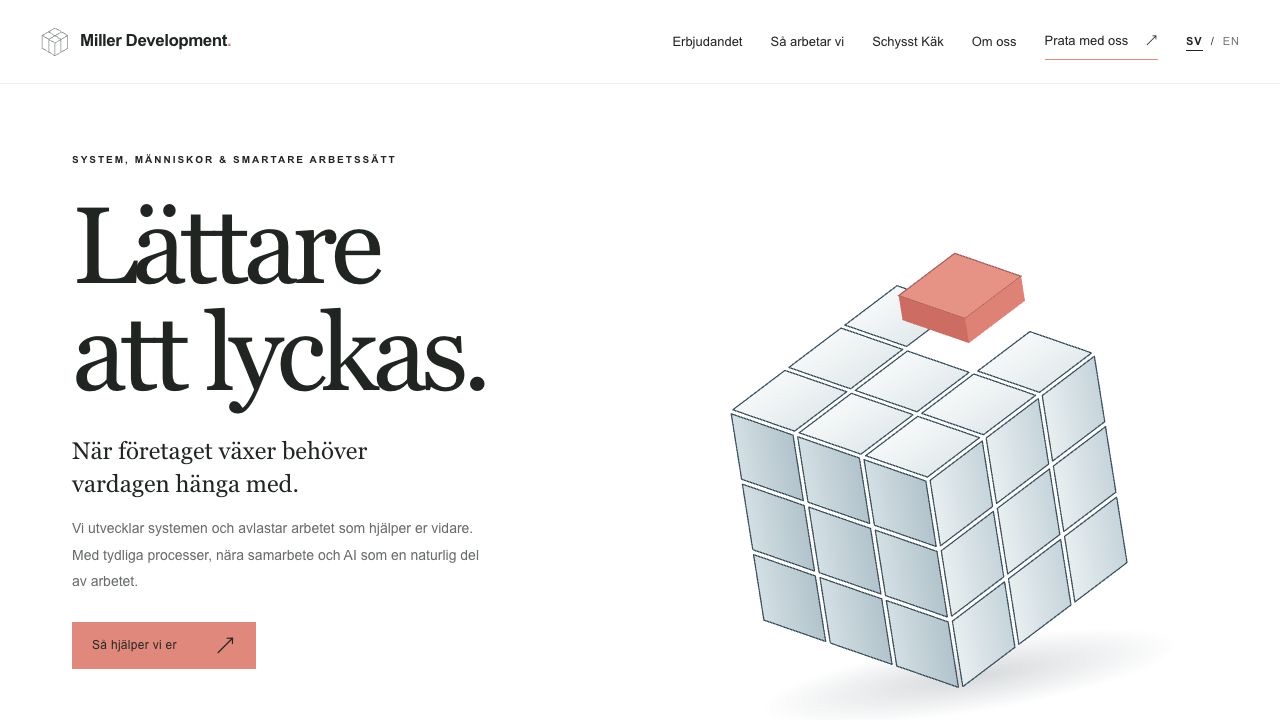
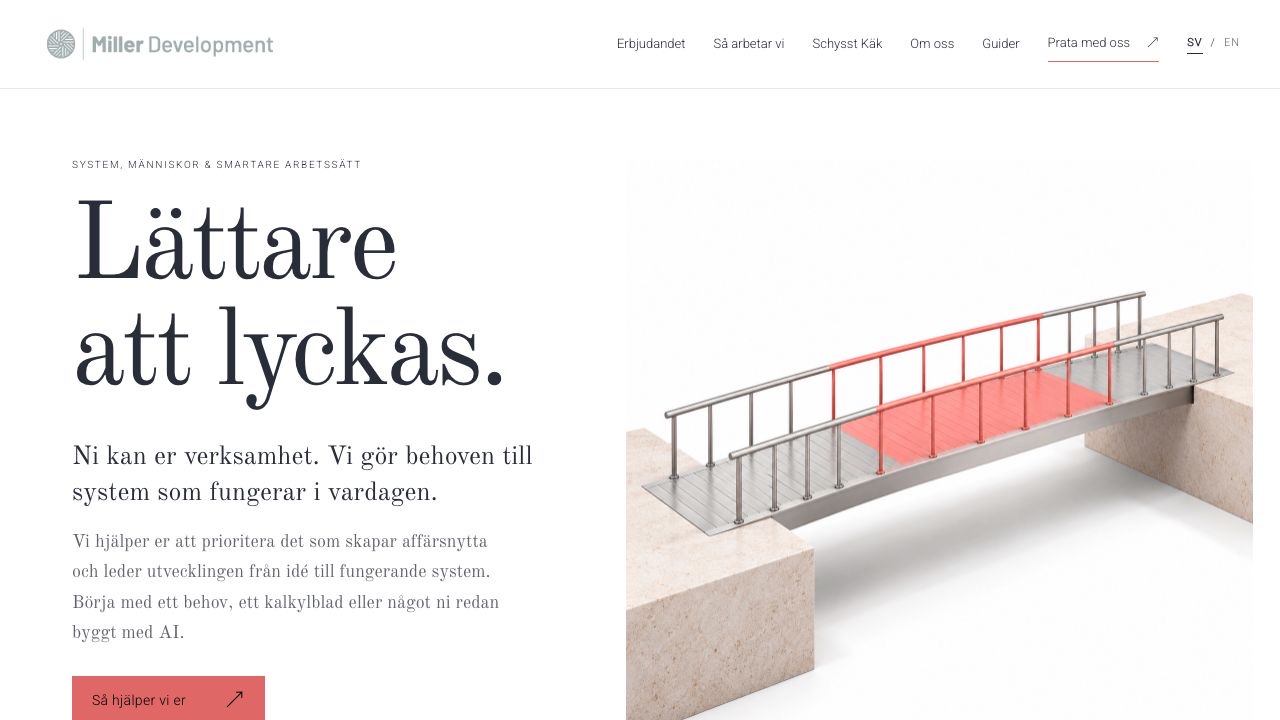
These images show two development stages of the new static site. The first draft is reproduced from the version history dated 26 October 2026. The later version shows how messaging, logo and imagery evolved. The images do not show the previous WordPress site.
How publishing works
Page creation happens locally. The web host receives finished files. No Python, PHP or database is needed to deliver this website.
Needs and content
We use AI and our own feedback to shape text, images and functionality.
Review and version
We produce complete HTML pages, check the result and save the source in Git.
Upload the files
The host serves HTML, CSS, JavaScript and images to the visitor’s browser.
Each editorial page has its own content file. We can build an updated page separately and package only changed files. A new page also brings updated overview pages and a sitemap. Shared design changes may affect several pages.
Static is simpler for our needs — not maintenance-free
The new site does not need WordPress core, themes or plugins to function. This removes those components from this solution’s maintenance. Hosting, domain, accounts, access and JavaScript still need responsible management. Adding index.html on top of old server files does not automatically retire the old installation.
Checks have covered internal links, images, language pairing, page structure and structured information. Interactive tools have their own functional tests. Git and upload packages support restoring earlier files; they do not replace backups or clear publishing responsibility. Tool entries are not sent to website analytics. Optional Analytics statistics are handled separately after consent.
A fast first draft still needs review, testing and improvement.
When might WordPress or another CMS be right?
A static approach was a deliberate choice for us. A CMS may be more practical for other needs. WordPress provides roles and permissions for editorial work, for example, and also needs a considered approach to updates.
| Need | What we would consider |
|---|---|
| Several editors publishing often | An editorial interface, roles and a clear publishing workflow may matter a lot. |
| A company website with a manageable number of content pages | Static pages may be a simple alternative when the process for changes is organised. |
| A shop, authenticated services or business data | These need a separate assessment of functionality, integrations, security and maintenance. Our solution cannot be copied without that assessment. |
The most important choice came before the tool
For this site, we could leave out a CMS. That does not mean every website or business system should work the same way. This is a content site with some browser-based tools, not evidence that an AI prototype is ready for business-critical production use.
The approach carries over to customer projects: understand the need, make an idea concrete, review the result and keep the next step as small as possible without losing the value.
Sources and method
This is Miller Development’s own account of building the website. AI was used for draft text, code and illustrations, followed by feedback and checks. Screenshots show preserved development stages; we report no measured cost, time or security improvements. The WordPress documentation below describes its features and maintenance, not a comparative security audit.
MILLER DEVELOPMENT
What would you like to make easier with AI and software?
We help businesses prioritise value and take ideas and AI builds towards working business systems. Start with the need — we help choose a sensible next step.
Talk to us ↗